
Updated September 2026
Wonaco Complaints and Reputation
 Available in AU
Public complaint records show recurring reports involving withdrawal delays, KYC disputes and poor communication. Casino Guru currently labels user feedback as mixed while assigning its own very low Safety Index, and AskGamblers shows a low player rating alongside several public complaint cases. Those ratings belong to the third-party review platforms.
The more useful signal is the pattern beneath the ratings. Some players report withdrawals remaining pending beyond the operator’s published finance-review window, while other complaints have been resolved after the casino processed payments or responded through a complaint service. KYC-related cases also vary: some concern delayed or expanding document requests, while others close after documents are supplied or the player withdraws the complaint. That mix is why individual case outcomes should be separated from the official terms and from ACMA’s separate regulatory action.
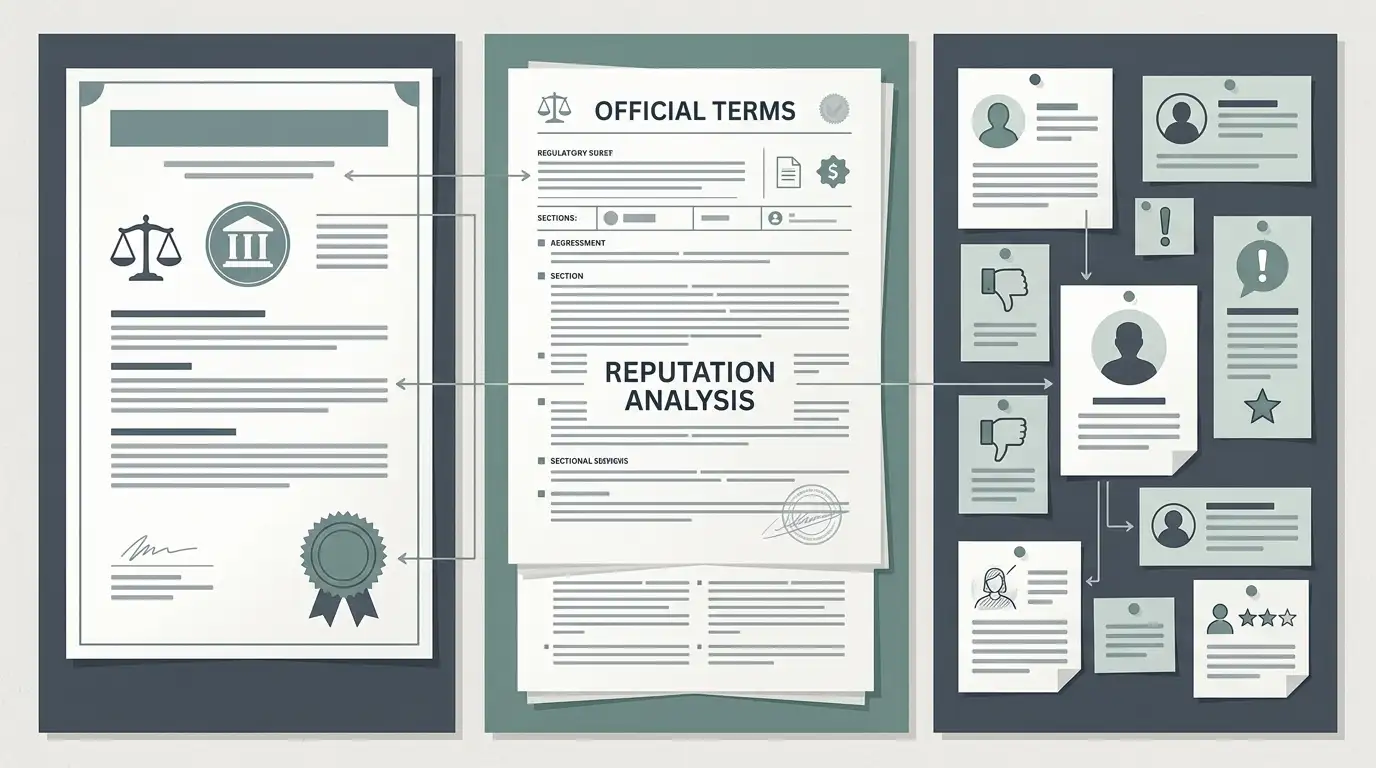
Table of Contents
- Keep regulator records, terms and complaints separate
- Casino Guru currently shows mixed user feedback and a negative expert assessment
- AskGamblers currently shows a low player rating but several resolved complaints
- Withdrawal delays are the most visible recurring complaint theme
- Official terms provide the benchmark for interpreting payout complaints
- KYC disputes are another recurring theme
- Support communication is part of the complaint pattern
- Resolved complaints matter, but they do not erase the underlying delay
- Rejected or closed complaints also need context
- ACMA enforcement is separate from customer complaints
- Practical documentation steps if a problem occurs
- Why complaint records need more context than a single label
- How to use complaint records before making a decision
- References
Keep regulator records, terms and complaints separate
Wonaco’s reputation can be considered through three different sources. The first is regulator material, such as ACMA’s website-blocking action. The second is the operator’s published terms, which set withdrawal limits, review windows and KYC powers. The third is user-reported experience published through complaint and review platforms.
Each answers a different question. Regulator records tell you about compliance and enforcement. Official terms tell you what the operator says its process should be. User reports tell you what some customers say happened in specific cases. The clearest picture comes from comparing all three rather than treating one as a substitute for the others.
Casino Guru currently shows mixed user feedback and a negative expert assessment
Casino Guru’s current Wonaco review, last updated in September 2026, labels user feedback as Mixed based on seven user reviews. Its own expert methodology produces a Safety Index of 2.4, which it describes as very low. Casino Guru says its rating also considers terms, complaint history, estimated casino size, blacklists and other factors.
That Safety Index belongs to Casino Guru. The useful detail is the underlying complaint data and the reasons Casino Guru gives for its rating. Its current Wonaco page shows a combination of opened, unresolved, resolved and rejected complaints rather than one uniform complaint outcome.
Casino Guru also explicitly warns that user reviews can be distorted by fake praise or repeated negative submissions. That is a useful caution when interpreting any small user-review sample. A handful of ratings can reveal themes, but it should not be treated as a statistically complete picture of every customer experience.
AskGamblers currently shows a low player rating but several resolved complaints
AskGamblers’ current Wonaco review shows a low player rating based on a small number of reviews, while its published complaint section includes several resolved cases. The same review page highlights slow withdrawals as one of the site’s negatives and identifies delayed withdrawals and support communication as recurring themes in user feedback.
Some complaint cases reached a resolution after being escalated, which adds useful context to the rating. That means the public record contains both negative reports and examples where funds were later processed or the complaint was closed as resolved.
A reputation page that only reproduces the low rating would miss that distinction. A page that only points to resolved cases would also be incomplete. The public complaint record shows a mixed history with meaningful negative signals, especially around payouts, but not a claim that every complaint ends unresolved.
Withdrawal delays are the most visible recurring complaint theme
Recent complaint records on both major platforms repeatedly mention withdrawals remaining pending longer than the player expected. One AskGamblers case described three EUR 500 requests that had been waiting for around two weeks. The case was later marked resolved after Wonaco said previous requests had been processed. Another AskGamblers case involving delayed payments was also marked resolved.
Casino Guru’s current Wonaco complaint list includes multiple delayed-withdrawal entries, including a September 2026 complaint in which the player said a card withdrawal had remained pending for more than 10 days despite completed KYC. Casino Guru marked that particular case resolved shortly after submission. A separate newer complaint submitted on 21 September 2026 remains open in the current public record.
These records support one narrow finding: withdrawal delay is a recurring user-reported issue. They do not establish that every Wonaco withdrawal is delayed or that every player account follows the same path.
Official terms provide the benchmark for interpreting payout complaints
Wonaco’s current General Terms and Conditions say the finance department works withdrawal requests within 3 business days after the request is made and/or within 3 business days after the last withdrawal request was paid, provided the relevant checks and conditions are complete. That wording is the natural benchmark when a complaint says a request remained pending much longer.
The same terms also allow delays while identity, source-of-funds and other compliance checks are completed. They cap the number of pending withdrawals at three and impose account-level daily and monthly limits. This means a complaint about a long wait cannot be interpreted from elapsed time alone without knowing whether KYC, request sequencing or account limits were involved.
For the full official cashout rules, use Withdrawals: Limits, Times and KYC.
KYC disputes are another recurring theme
Casino Guru has published Wonaco complaints involving delayed verification, changing document requests and withdrawal blocks while KYC was unresolved. One high-value complaint from 2026 was closed unresolved after the complaint team said communication with the casino stopped. Another KYC-related complaint was closed after the player chose to withdraw the complaint following further document discussion.
These cases show why “KYC complaint” is not one single category. Some disputes concern whether the requested documents can be submitted, some concern how long review takes, and others concern repeated or additional requests. The public record includes different endings.
Wonaco’s own terms give the operator broad verification powers and allow identity, residence, source-of-funds and payment-ownership checks. They also publish a user response deadline and a usual review period once a request is answered in full, with additional time possible for complex cases. For the official rules, see Verification and KYC.
Support communication is part of the complaint pattern
Several public complaint narratives mention repeated live-chat contact without a clear explanation for a delayed payment or verification issue. AskGamblers’ player-review summary also highlights frustration with support communication in relation to withdrawals.
These are user reports, not complete transcripts of every interaction. Still, repeated complaints about unclear status updates are relevant because communication quality affects how a delay is experienced. A payment that is pending for a legitimate check can still create avoidable frustration if the customer receives only generic responses and no clear next step.
When contacting support, users can keep a clearer record by saving ticket numbers, timestamps and the exact status shown in the account. That helps distinguish a generic complaint from a documented sequence of events.
Resolved complaints matter, but they do not erase the underlying delay
A complaint being marked resolved means the specific dispute reached an outcome accepted by the complaint platform or complainant. It does not mean the original delay never happened. For example, an AskGamblers case can be both a real report of a two-week wait and a resolved case because the withdrawal was ultimately processed.
This distinction is important when reading complaint statistics. Counting only unresolved cases understates the number of users who encountered a problem. Counting every complaint as permanent proof of non-payment overstates the negative outcome. The better approach is to record both the issue and how it ended.
Rejected or closed complaints also need context
Casino Guru’s complaint data includes rejected and closed cases alongside resolved and unresolved ones. A rejected complaint does not automatically prove the player was wrong in every factual detail. It means the platform did not accept the complaint under its process or documentation standard. Likewise, a closed complaint can reflect a player withdrawing the case rather than the platform ruling fully for either side.
For reputation analysis, status labels are useful only when paired with the reason. A resolved payment delay, an unresolved KYC dispute and a rejected bonus complaint are not interchangeable events even if all three appear in the same complaint count.
ACMA enforcement is separate from customer complaints
ACMA’s May 2026 blocking action against Wonaco is more relevant to Australian regulatory status than any review-site rating. But it does not prove the facts of an individual withdrawal or KYC complaint. Regulatory non-compliance and customer-service disputes are different issues.
This separation prevents overclaiming. A complaint should be judged from its own documentation and outcome. ACMA’s action should be used to understand the operator’s Australian regulatory position. For those details, use Licence, ACMA Status and Trust.
Practical documentation steps if a problem occurs
- Save the version of the relevant terms or promotion conditions that applied when the transaction was made.
- Record the date, amount and status of each withdrawal request.
- Keep KYC request emails and note when a complete response was submitted.
- Save support ticket numbers, chat transcripts or dated records of status updates.
- Keep proof that the payment method belongs to the account holder.
- Separate bonus disputes from ordinary cash-balance withdrawal disputes.
- When using a third-party complaint service, provide a concise timeline and supporting documents rather than only a general accusation.
These steps do not guarantee a favourable outcome. They make it easier for support staff, a complaint platform or another reviewer to compare the case against the operator’s published rules.
Why complaint records need more context than a single label
The current public record contains meaningful negative signals: low third-party ratings, repeated delayed-withdrawal reports, KYC disputes and ACMA enforcement. It also contains resolved complaints, mixed user feedback and cases with different factual circumstances. That record gives readers reasons to examine the details carefully, but the sources do not establish the same outcome for every customer or dispute.
The more precise reading is that Wonaco has a complaint history in which withdrawal timing, verification and communication recur as problem themes, while outcomes range from resolved to unresolved. Australian readers should compare those complaint records with the official terms and the separate ACMA regulatory record rather than relying on one label.
How to use complaint records before making a decision
Start with the issue that matters most to you. If withdrawal timing is the concern, compare recent complaint reports with the operator’s published finance window and account-level limits. If KYC is the concern, read recent verification complaints together with the current document and timing rules. If legal status is the concern, ignore review scores and go directly to ACMA.
Then look at outcomes rather than headlines. A resolved complaint shows that escalation can sometimes produce a result, while an unresolved case shows that some disputes remain open or break down. Finally, keep the sample size in perspective. Review platforms capture people motivated enough to post or complain; they do not represent every customer.
For the broader product picture, return to the Casino Australia Review 2026.
References
- Casino Guru – Wonaco Casino review and complaint data
- AskGamblers – Wonaco Casino review and complaints
- AskGamblers – resolved delayed-withdrawal complaint
- Casino Guru – unresolved withdrawal/KYC complaint
- Wonaco – General Terms and Conditions, version 1.12
Written by the editors at Wonaco Casino.