
Updated September 2026
Wonaco Verification and KYC
 Available in AU
Wonaco’s current General Terms and Conditions allow verification both before and after deposits and before or after a withdrawal. The operator can request evidence to verify identity, age, residence, source of funds and ownership of payment methods. Examples named in the current terms include certified ID, proof of residence, bank or card statements and other payment-method ownership or transaction-history evidence. These are examples, not a guaranteed exhaustive checklist for every account.
The current terms give users 30 days to provide requested documents and information. They say Wonaco will usually verify the material within 10 days after the request has been answered in full, while reserving additional time or checks for complex cases. That is a published target, not a guaranteed completion time. Payment can be withheld and an account can be suspended while requested verification remains incomplete.
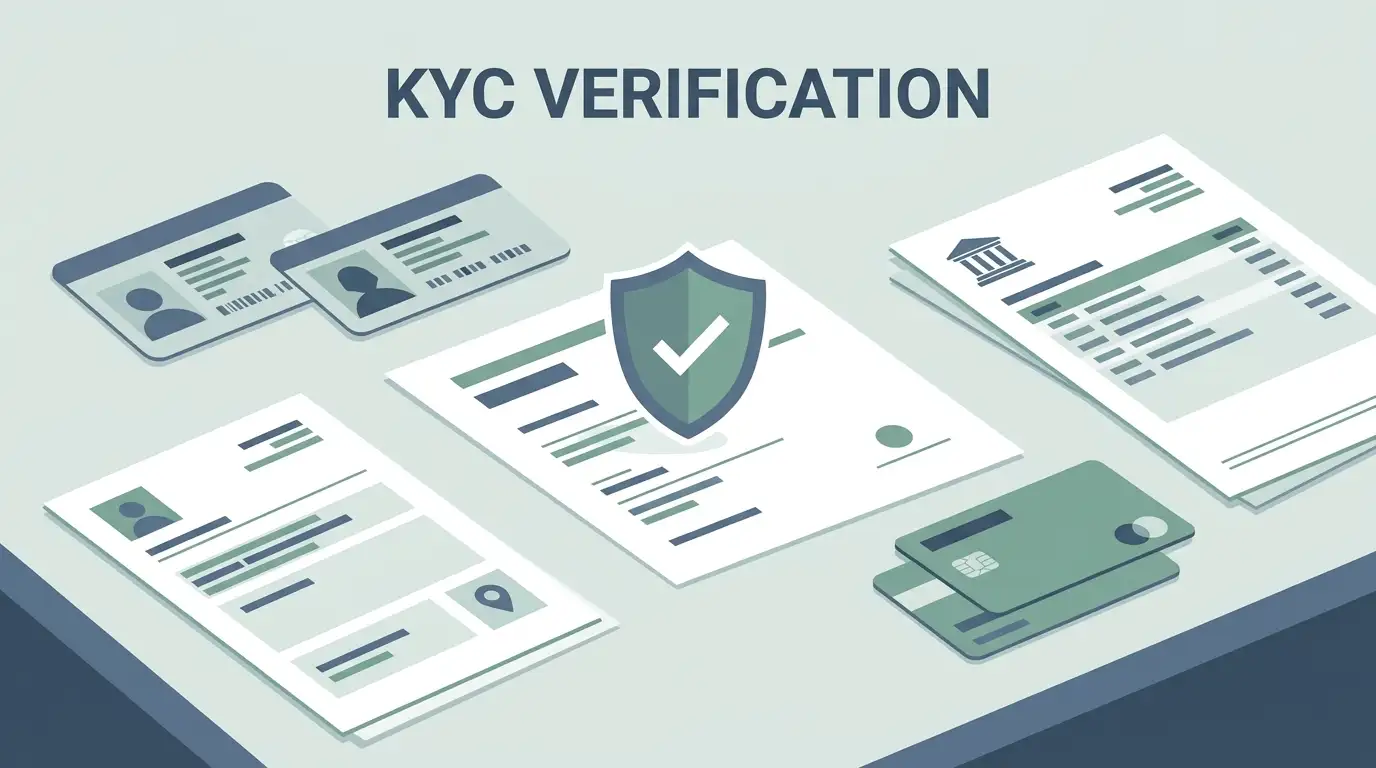
Table of Contents
- KYC can happen at more than one point in the account lifecycle
- Identity evidence is one of the named document categories
- Proof of residence can also be requested
- Payment-method ownership is part of verification
- Source-of-funds checks can go beyond basic identity
- Wonaco can use additional checks and third-party services
- The user has 30 days to answer a document request
- The current terms say verification is usually completed within 10 days after a complete response
- Incomplete responses can extend the process
- KYC can pause a withdrawal
- Document quality and consistency matter
- What KYC does not prove
- A practical KYC preparation checklist
- How to interpret a verification request
- References
KYC can happen at more than one point in the account lifecycle
Wonaco’s current terms do not limit verification to one fixed stage. They allow additional procedures before or after deposits and before or after withdrawals. This means a user can register successfully and use the account before a more detailed document request appears later.
That timing is important because some users assume KYC only begins when a withdrawal is requested. Under the published terms, it can occur earlier or later depending on the operator’s checks. The practical approach is to keep account information accurate from registration onward rather than waiting for a cashout to correct mismatches.
The broader registration rules are covered on the Account and Registration page. The details below cover verification requirements, documents and timing.
Identity evidence is one of the named document categories
Section 5.1 of the current terms says Wonaco can request information needed to verify identity and specifically gives properly certified identification as an example. In the refund section, the terms also name passport, driving licence and identity card as examples of identity documents that can be requested in that context.
These examples should not be turned into a promise that every user will be asked for exactly one of those documents or that no other identity evidence can be requested. The terms deliberately use non-exhaustive language and allow additional procedures where the operator considers them necessary.
When submitting identity evidence, the practical priority is readability and consistency. The name and other relevant details should align with the account profile, and the image should not be cropped so tightly that required document information becomes unreadable.
Proof of residence can also be requested
The current KYC terms name proof of residence as another evidence category. In the refund rules, utility bills, bank statements and rental agreements are listed as examples of proof-of-address material. Again, those examples do not create a universal exhaustive list for every verification case.
Residence evidence matters because the account’s registered address and the document should make sense together. A recent move, an outdated profile or a document issued to another person can create questions that would not exist if the account details had been updated promptly.
Users should follow the specific request shown by Wonaco rather than submitting an arbitrary document simply because it has an address on it. The operator can define what evidence is acceptable for the individual case.
Payment-method ownership is part of verification
Wonaco’s terms allow the operator to request proof of ownership and transaction histories for payment methods, including bank or credit-card statements. The general account warranties also say the card or other payment method used to fund the account must belong to the account holder.
This creates a direct link between deposits and KYC. A funding method that cannot easily be shown to belong to the registered user can complicate later checks. Payment ownership can become particularly relevant around withdrawals because Wonaco says it uses the same payment method for withdrawal where possible and can delay a withdrawal while checks are performed.
For payment categories and cashier availability, use the Wonaco payment methods Australia guide. For cashout timing and limits, use Withdrawals: Limits, Times and KYC.
Source-of-funds checks can go beyond basic identity
The current terms expressly allow Wonaco to request information needed to verify the source of funds deposited to an account. This is a different question from proving who the user is. Identity evidence links the account to a person; source-of-funds evidence addresses where the money used on the account came from.
The terms do not publish one guaranteed source-of-funds document list for every situation. The appropriate evidence can depend on the transaction history and reason for the check. Users should therefore respond to the specific request rather than assuming a single bank statement will always be sufficient.
Wonaco can use additional checks and third-party services
The official terms allow the operator to use recognised third-party providers for checks, including credit-reference agencies, identity-verification services and fraud-prevention software. They also permit additional security checks such as calls, phone verification or face verification where required.
This explains why two users can receive different verification flows. One account can be resolved with document uploads, while another can require an additional call or identity step. The published terms give Wonaco discretion to choose checks based on the circumstances rather than promising one fixed KYC sequence.
The user has 30 days to answer a document request
The current Terms v1.12 say requested documents and information must be provided within 30 days after the request is made. They also allow Wonaco to withhold payment and suspend the account until the requested material is supplied, and to permanently close an account if the information is not provided in time.
This is a deadline for the user’s response, not the operator’s verification-completion time. The two timing rules are separate. If a user waits most of the 30-day window before responding, the verification review naturally cannot begin from a complete submission on the first day.
For practical record-keeping, note the date of the request and the date on which the response was complete. That second date is the important reference point for Wonaco’s published review wording.
The current terms say verification is usually completed within 10 days after a complete response
Wonaco’s current terms say documents and information will usually be verified within 10 days after the operator’s request has been answered in full. The same sentence immediately adds that, depending on the circumstances and complexity of the case, additional time and/or checks may be required.
That qualification matters. “Usually within 10 days” is not a guarantee that every KYC case finishes by day 10. An incomplete response can delay the starting point, and a more complex case can require additional checks after a seemingly complete submission. The most accurate interpretation is a published usual review period with an explicit complexity exception.
KYC does not have a guaranteed completion time. The current terms say review is usually completed within 10 days after a request is answered in full, with additional time possible.
Incomplete responses can extend the process
Wonaco ties its usual review period to the point when the request has been answered in full. Sending one requested document while omitting another does not necessarily create a complete response. If the operator then asks for the missing item, the practical review timeline extends.
A better submission process is to read the request as a checklist and answer all parts together where possible. Make sure images are readable, names and addresses are visible where required, and payment evidence relates to the method actually used. If a requested document cannot be provided, contact support and ask what alternative evidence is acceptable instead of silently omitting it.
KYC can pause a withdrawal
Wonaco’s withdrawal terms allow the operator to delay processing while it checks identity, account balance, source of funds and compliance with the Terms. The operator can postpone payment until verification procedures and checks are successfully completed.
This is why the published finance-processing window for withdrawals should not be read in isolation. A withdrawal can sit behind a verification requirement that must be completed first. The dedicated Wonaco withdrawal guide explains the finance window, AUD limits and pending-request rules without repeating the full KYC process here.
Document quality and consistency matter
The official terms name the main document categories but do not give one universal upload specification for every case. A sensible document submission should nevertheless be complete and legible. Avoid blurred images, missing corners, unreadable details or files that do not show the requested ownership information.
Consistency matters as much as image quality. The identity, address and payment details in the documents should correspond to the account data. Where the details have legitimately changed, update the account or explain the change through the appropriate support process rather than creating an unexplained mismatch.
What KYC does not prove
Completing Wonaco’s identity checks does not prove that the operator is licensed in Australia. KYC is an account and compliance process used by the operator. Australian licensing and enforcement are separate regulatory questions.
ACMA named Wonaco in a website-blocking action in May 2026. That regulatory fact remains separate from whether an individual account has passed identity verification. For the Australian regulatory layer, see the Wonaco licence, ACMA status and trust guide or the broader Casino Australia Review 2026.
A practical KYC preparation checklist
- Keep the registration name, address and contact data accurate.
- Use payment methods that belong to you.
- Retain access to identity, address and payment-ownership evidence.
- Read the exact request before uploading documents.
- Respond to every requested item rather than sending a partial bundle.
- Use readable, complete images and avoid unnecessary cropping.
- Record when the request was received and when the response became complete.
- Expect that extra checks can be added in a more complex case.
- Do not treat the published 10-day wording as a guaranteed deadline.
How to interpret a verification request
A KYC request is best understood as a set of case-specific questions built from several possible evidence categories. The current terms support identity, age, residence, source-of-funds and payment-ownership checks, plus additional phone, face or third-party verification where required. They do not support a claim that every account follows one identical checklist.
The most useful response is therefore precise rather than defensive: identify what the request asks for, provide the complete evidence that applies, keep a record of submission and follow up through support if the requested evidence cannot be provided in the stated form. This reduces avoidable delay without implying that the operator is bound to finish every case on the same timetable.
References
- Wonaco – General Terms and Conditions, version 1.12
- ACMA – Wonaco website-blocking action, 21 May 2026
Prepared by the Wonaco Casino editorial staff.